Showing posts with label ECDIS. Show all posts

Thursday, 12 December 2013

When is ECDIS mandatory?

As with the BNWAS regulations that preceded them, the regulations that have made ECDIS mandatory (IMO - Solas Chapter V Regulation 19.2) require a staggered compliance schedule based on vessel types.


Newbuild Vessels


Passenger Ships

Passenger Ships of 500 gross tonnage and upwards constructed on or after 1st July 2012.

Tankers

Tankers of 3,000 gross tonnage and upwards constructed on or after 1st July 2012.

Cargo Ships

Cargo ships other than tankers, of 10,000 gross tonnage and upwards constructed on or after 1st July 2013.

Cargo ships, other than tankers, of 3,000 gross tonnage and upwards but less than 10,000 gross tonnage constructed on or after 1st July 2014.


Existing Vessels


Passenger Ships

Passenger ships of 500 gross tonnage and upwards constructed before 1st July 2012, not later than the first survey on or after 1st July 2014.

Tankers

Tankers of 3,000 gross tonnage and upwards constructed before 1st July 2012, not later than the first survey on or after 1st July 2015.

Cargo Ships

Cargo ships, other than tankers, of 50,000 gross tonnage and upwards constructed before 1st July 2013, not later than the first survey on or after 1st July 2016.

Cargo ships, other than tankers, of 20,000 gross tonnage and upwards but less than 50,000 gross tonnage constructed before 1st July2013, not later than the first survey on or after 1st July 2017.

Cargo ships, other than tankers, of 10,000 gross tonnage and upwards but less than 20,000 gross tonnage constructed before1st July 2013, not later than the first survey on or after 1st July 2018.

A simplified version of this information can be seen in the table below: 


Wednesday, 4 December 2013

Why manufacturers must offer ECDIS leasing

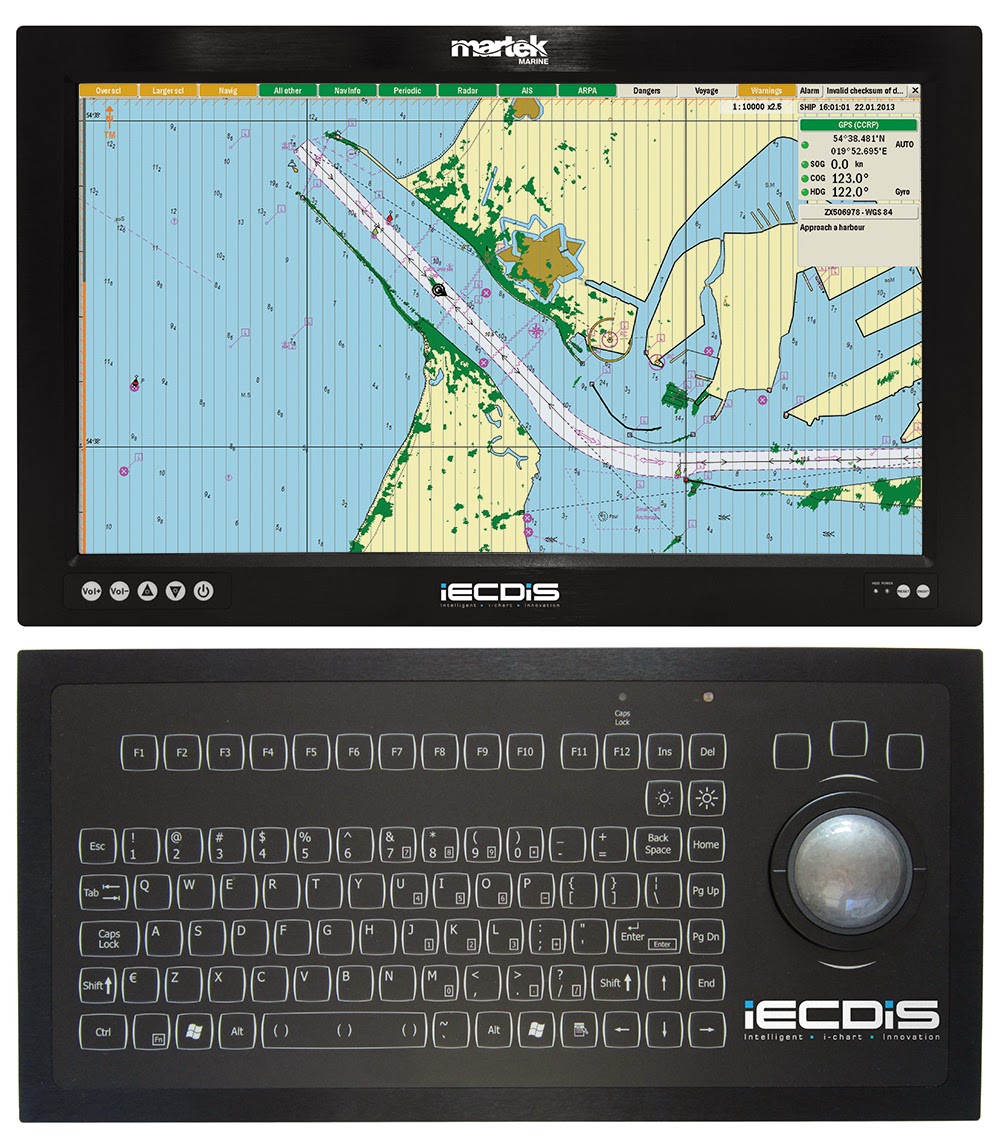
ECDIS, Electronic Chart and Display System, is the name given to the hardware driving shipping’s switch to electronic navigation. Essentially a simplified computer designed for use on a vessel’s bridge, the most basic function of an ECDIS is to display navigational charts on a screen showing the vessel’s position.

It’s the additional functions which really set ECDIS apart from paper charts though – a powerful system of tools, notifications and alerts which provide the navigator with essential, real time information and warnings of potential hazards far ahead of time.

ECDIS alerts the navigator if any sections of the route are considered unsafe based on the vessel’s requirements, this could be as simple as avoiding water shallower than the vessel’s draft or as complex as avoiding heavy seas for a vessel minimising the risk of liquefaction to a nickel ore cargo.

Chart overlays show information of interest on top of the chart itself, including weather and tide forecasts and piracy hotspots. This weather and tidal data feeds into the ECDIS’ automatic, optimised route planning, leading to fuel savings and reduced transit times. More advanced systems also support ice charts for arctic navigation and radar overlay, eliminating the need for two screens and making it easier to cross-reference the information from each piece of equipment.

As well as route planning and ongoing navigation, ECDIS has the potential to make huge efficiency gains within ship management, collecting data throughout the voyage and automatically sending it ashore, allowing for more accurate scheduling and easier maintenance and delivery logistics.

Most importantly though, ECDIS requires a fraction of the work of traditional charts to update, taking a huge burden off the navigator and allowing him or her to concentrate on safe route planning. Even the most basic systems can be updated regularly using a few CDs, while better devices automatically download and install updates and notices to mariners at port or even mid-voyage, meaning an immediate, significant saving on paper charts.

Research from DNV shows that the use of ECDIS may reduce grounding frequency by at least 30%. The third most frequent accident involving ships larger than 100GT, grounding is also the fourth highest contributor to marine fatalities at 12%.

Legally, the argument for ECDIS has been won. Electronic navigation is already required by law on new passenger vessels over 500 GT, new tankers over 3,000 GT and new cargo vessels larger than 10,000 GT. From June 2014 this will be extended to include new cargo ships above 3,000 GT and existing passenger ships built after July 2012 and larger than 500 GT. Two final waves will complete the legislation – existing tankers constructed after 2012 must navigate electronically no later than their first survey on or after July 1 2015, while existing cargo carriers bigger than 50,000 GT and constructed after July 1 2013 must meet the legislation no later than their first survey on or after 1 July 2016.

Despite the enthusiasm of the regulators though, ECDIS was not universally welcomed and lost trust among many users after early issues with the technology, including the lack of a legal requirement for different systems to use the same symbols to denote certain hazards. Meanwhile, opponents say it reduces important navigation skills and leads to decreased vigilance. Stories abound of navigators watching their screen intently as unmarked hazards sail past the bridge windows. After several years of hard work though, most of these issues have been cleared up and ECDIS equipment has emerged as reliable and meticulously thought-through, and opinion is starting to turn in its favour.

The biggest opposition to ECDIS though has always been over the timing of its implementation. Introduced after five years of rock-bottom freight rates and amid a raft of other expensive legislation, including emissions reduction and ballast water management, critics say that ECDIS is important but not urgent enough to justify such short, strict deadlines while owners and operators are struggling with tight margins and a crippling lack of accessible finance.

While legally required to implement ECDIS, there is a danger that companies will do as little as possible to meet the required legislation and wait until the last minute to implement the technology, which would be far more dangerous than continuing to use tried and tested paper charts. If companies use only the most basic functions of ECDIS and crew are not well-trained and comfortable with electronic navigation, there is a risk that we could see more groundings and collisions, all while the technology’s vast potential sits untapped.

This problem can be significantly eased by ECDIS manufacturers, who must make the responsible choice to offer leasing options on their equipment. Leasing is absolutely crucial to give operators and shipowners the opportunity to limit their risk and reap the benefits ECDIS can bring. Early adoption allows crew longer to get to grips with equipment and learn how to get the most from electronic navigation without the pressure of the IMO deadline.

Beyond the safety aspect, the advantages of leasing are numerous. There is no need for a large capital outlay, easing cash flow in difficult circumstances and leaving more money available for essential training.

While technology changes at such a rapid pace, it’s a real disadvantage to be stuck with equipment which isn’t up to date. Leasing allows operators to easily change supplier or system if they feel a better alternative is available and also makes it easier to trial different systems. This flexibility is not necessarily good for the manufacturer, but it is extremely important for the purchaser and the wider industry, because it encourages the innovations that will lead to ever improving safety records and the best possible use of ECDIS’ huge potential.


ECDIS does not have to be a cost - full training, getting the most out of the ECDIS you choose and integrating it with your onshore operation can all immediately lead to increased efficiency, reduced transit and waiting times, and could ultimately lead to savings which cover the cost of the equipment itself. For the good of the industry, manufacturers must make the first step by offering the option to lease a piece of equipment which, implemented in good time and used right, has the potential to prevent more collisions and groundings than perhaps any other single piece of equipment in modern shipping. 

Monday, 25 November 2013

ECDIS information offered to shipowners in new book

Information and advice on moving from traditional paper navigational charts to ECDIS platforms has been offered in a new book published by The Nautical Institute.

The second edition of 'From Paper Charts to ECDIS' has been published to offer full guidance on training, practice and equipment. It has been four years since the first edition was released, and the Nautical Institute’s Sea Going Correspondence Group (SGCG) believed that this second version was necessary due to the masses of experience that has been gained within the field in recent years.

Author Captain Harry Gale said: “As well as supporting its members through this fundamental change, The Nautical Institute wants to ensure that the best practice encapsulated in this second edition, incorporating experience at sea, reaches as wide an audience as possible throughout the industry. Bridge procedures have to be amended to accommodate the very different working practices needed for using ECDIS and failure to instigate the discipline of being alert and engaged when using ECDIS may lead to distraction, complacency and ultimately accidents.”

The Institute’s chief executive Philip Wake added that the industry had been starting to learn about the importance of ECDIS training back in 2009, but this move from paper to technology has been deemed difficult. Since then, a series of recommendations have now been listed by the Institute, which feature in this new book. It is hoped that the information available will be applicable to shipowners until at least 2018, by which time training on most vessels should be completely accurate.

The book's launch was part of the E-Navigation Revolution conference in London on November 20th and 21st. The wider conference looked at navigational safety issues that still remain a top priority within the industry. 

Tuesday, 14 May 2013

When will you be adopting ECDIS?


July 2014 will come around faster than you think, and here at Martek, we’d love to know when you plan on complying with the IMO mandated regulations for ECDIS installation by completing the online poll on our homepage.

It has been a requirement to fit Electronic Chart Displayand Information Systems on new build ships since July 2012, with IMO legislation coming into effect for existing passenger ships
in July 2014. This will be followed by existing tankers in 2015, and existing cargo ships from 2016 – 2018.

There are great financial and safety incentives to invest in ECDIS well before the IMO mandate.

According to DNV research, deploying ECDIS reduces the grounding frequency by 30%, the fourth highest contribution to marine fatalities. Early adoption also allows your crew a longer transition period to paperless navigation so they acquire competency and confidence before the deadline, easing pressure when ECDIS becomes mandatory.

ECDIS will also save your company money as it eliminates the need for paper charts, administration and logistics. Time is also saved as manual updates to the chart are replaced with automated updates.

ECDIS can also save fuel costs as the system will optimise and automate your route plan, taking into account weather and tidal information, ultimately cutting out transit times by plotting the shortest, safest route.

However, some companies have other reasons for holding back on purchasing ECDIS, as they are unsure about what’s required of them and the training involved. Visit our ECDIS information website to read about the implementation schedule, the training required under the IMO and FAQ’s. 

Monday, 22 April 2013

Oliva crash could have been avoided if the vessel had ECDIS installed

It has emerged this month that MS Oliva could have been saved using an Electronic Chart Display and Information System (ECDIS) that could have warned the crew they were about to run aground off the shore of Nightingale Island.

The 2011 crash happened on the 16th March at Spinners Point. According to the investigation the second mate drew up a passage plan for the first leg of the voyage which would take the 75,000-dwt bulker form the Brazilian port of Santos to China. Waypoints were then plotted on a paper chart and were intended to take the vessel 10 nautical miles south of the Tristan Da Cunha Islands.

On approach to the islands the second mate saw a large echo on the radar but assumed it to be “a rain cloud or an iceberg”, the report said. At around 5am the chief mate made the same mistake, identifying a large echo directly ahead as a “heavy storm cloud”. The hazard was in fact Nightingale Island. The ship, carrying a cargo of soya beans and 1,700 tonnes of fuel oil, then ran aground, causing serious implications for the islands and its inhabitants with widespread pollution and its important lobster-farming industry closing for nearly two years. The vessel would then eventually break up, and was declared a constructive total loss.
From the investigation, it is clear that an ECDIS on board would have prevented the devastating grounding in 2011. The ECDIS would have recognised their mandatory points causing an audible alarm to be sounded when the danger ahead was seen in the ships path.

With ECDIS on board the crew of 22 could have plotted the entire route on the chart, with visible clear instructions on where dangers lay. This disaster and many more could have been avoided.

Thursday, 28 February 2013

What role does technology play in reducing shipping accidents?


A recent article on the Canadian Underwriter website on the increase in global ship losses highlights the role that technology will play in reducing shipping accidents if carefully applied to the industry with quality training and well thought out operational implementation.

Increasingly, ship losses are becoming more and more visible to the general public with recent cases such as the sinking of the cruise ship Costa Concordia off the coast of Italy striking a particular chord. This not only causes human tragedy but bad PR for the ship owners. As such it is shown that self-regulation is now as much a pressure driver as IMO led requirements.

However, for as many owners that prioritise safety there are as many again that put costs far above. With freight rates depressed at the moment in most markets there is little free cash (and incentive) to invest in quality training and as a consequence some owners will decide to choose the cheapest option for compliance tick boxing only.

Human error is the biggest cause of accidents but with the introduction of technology into ship operations this is on a downward trend in general and will continue to do so as both technology improves, seafarers gain competency and IMO regulation engulfs increasing segments of the industry.

Hopefully this provides an optimistic indication of the industry embracing ECDIS ahead of the mandate.

For the full article please visit http://www.canadianunderwriter.ca/news/global-ship-losses-increase-in-2012-but-downward-trend-continues/1001973563/

Martek Marine introduces new website ahead of iECDIS launch


Martek continues to bring the maritime industry up to date with the launch of their new go-to site for everything ECDIS related at www.ecdis-info.com.

The site includes information on topics from training options to flag state requirements. There’s also information on the ECDIS regulations as they come into place at the start of July 2012, beginning with the requirement to have ECDIS on-board all new build passenger and tanker ships. By 2018 this will become a requirement on all existing and new-build ships.

Be sure to keep checking back on the website, as Martek will soon be announcing the launch date to bring their ECDIS to market. The iECDIS package will include the full training needed, regular chart updates, hardware and full software installed.

In conjunction with the website you can also follow on twitter @dontbuyecdis and the Linkedin forum ECDIS User Group.

Martek welcomes on board ECDIS technical specialist


Martek Marine is pleased to announce the recruitment of Torben Holmelund, Technical Manager.

Based in Denmark, Torben will be managing the production and launch of the new iECDIS and will be specialising in the technical aspects as it goes to market in March.

Bentley Strafford-Stephenson, ECDIS Product Specialist states “Torben is a welcome addition to the team with the announcement of our new iECDIS for launch in March this year. Torben brings with him a wealth of experience of ECDIS having worked in the maritime industry for many years.”

We welcome Torben to the Martek team.

Tuesday, 27 November 2012

What is ECDIS?


An Electronic Chart Display and Information System (ECDIS) is a computer-based navigation system that complies with IMO regulations and can be used as an alternative to paper navigation charts. Integrating a variety of real-time information, it is an automated decision aid capable of continuously determining a vessel’s position in relation to land, charted objects, navigation aids and unseen hazards.

An ECDIS includes electronic navigational charts (ENC) and integrates position information from the Global Positioning System (GPS) and other navigational sensors, such as radar, fathometer and automatic identification systems (AIS). It may also display additional navigation-related information, such as sailing directions.

ECDIS is defined in the IMO ECDIS Performance Standards (IMO Resolution A.817(19)) as follows:

Electronic Chart Display and Information System (ECDIS) means a navigation information system which, with adequate back up arrangements, can be accepted as complying with the up-to-date chart required by regulation V/19 & V/27 of the 1974 SOLAS Convention, by displaying selected information from navigation sensors to assist the mariner in route planning and route monitoring, and by displaying additional navigation-related information if required.

IMO - Solas Chapter V Regulation 19.2

At its 86th session from May 26 to June 5, 2009, the IMO’s Maritime Safety Committee approved new regulations for the mandatory carriage requirements of ECDIS.
2.1 All ships irrespective of size shall have:
2.1.4 Nautical charts and nautical publications to plan and display the ship’s route for the intended voyage and to plot and monitor positions throughout the voyage; an Electronic Chart Display and Information System (ECDIS) may be accepted as meeting the chart carriage requirements of this subparagraph
2.1.5 Back-up arrangements to meet the functional requirements of subparagraph 2.1.4, if this function is partly or fully fulfilled by electronic means.

The amendment to SOLAS Chapter V regulation 19.2 will require ships engaged on international voyages to be fitted with ECDIS according to the following timetable:

ECDIS Compliance Timetable
For more information about the ECDIS regulations and requirements visit www.ecdis-info.com.